

Contact
We will contact you as soon as possible.

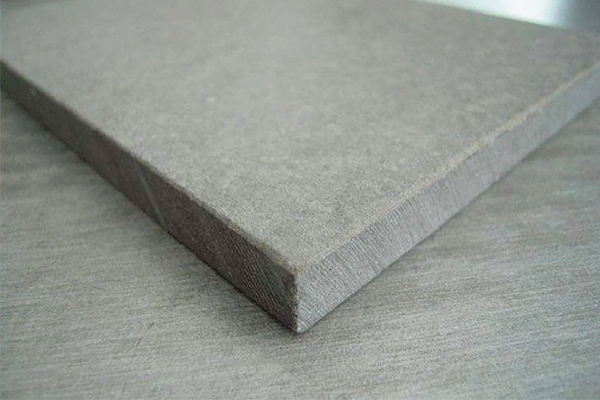


To mitigate fire risks, ductwork systems are commonly lined with various types of fire-rated boards. Silicate fireproof board is one of the most frequently specified materials for this purpose. Below is an overview of its manufacturing and installation process, along with key operational considerations.
Material Incoming → Duct Fabrication → Section Assembly → Component Connection → Duct Installation → System Debugging
1. Material Acceptance upon Delivery
Upon arrival of the fiber-reinforced silicate boards at the site, an initial visual inspection must be carried out. The surface should be smooth, with no missing edges or corners.
Additionally, the boards must be accompanied by the manufacturer’s certification and test reports, confirming that their performance complies with the design requirements and JT6-00 standards.
2. Duct Fabrication
A. Based on design requirements and field measurement data, prepare duct processing drawings and material cutting lists. The inner length of the duct shall conform to specifications. Material must be verified before cutting, and cutting shall follow marked lines only after verification is correct.
B. The four inner corners of rectangular ducts shall be constructed using equilateral angle steel as inner corner reinforcements, fastened with hex-flange self-drilling screws. Flange angle steel on all four sides shall be welded. When cutting, the inner length of the welded flange must not exceed the inner length of the duct.
Angle steel reinforcements and duct flanges shall be coated twice with heat-resistant paint. Cut angle steel with a shear machine, straighten, and drill holes using a bench drill. Rivet and bolt holes on flanges shall not exceed 150 mm spacing. Rectangular flanges shall have bolt holes at all four corners. Drilled steel sections shall be welded on a welding platform using clamps and templates for alignment.
C. During assembly of the duct’s four sides, the angle steel flanges at both ends shall serve as the main support frame. According to duct dimensions, fabricate the end flanges and side reinforcements separately, then weld them at the corners to form the internal duct skeleton.
First, secure the base plate and end flanges. Before installing side boards, apply sealant along both sides of the base reinforcement. Then install side boards, fixing them to reinforcements and flanges. Apply sealant along the top inner reinforcement joints before installing the roof board. Finally, install the roof board and secure it to flanges and reinforcements.
D. Side boards and flanges shall be fastened using hex-flange self-drilling screws spaced no more than 150 mm apart. boards and inner angle steel reinforcements shall be fastened with the same screws spaced no more than 230 mm apart.
E. Duct fabrication shall minimize seams. Longitudinal seams shall avoid the centerline of the longer side, and seams on opposite boards shall be staggered.
Joint sections shall be coated with waterproof sealant and clamped on both sides with 6 mm galvanized steel strips 100 mm wide. Secure the strips to the silicate board using self-drilling screws with longitudinal spacing not exceeding 150 mm. Splice-reinforced ducts shall include internal angle steel supports spaced 600 mm vertically and horizontally.
F. Duct tees are fabricated in two forms: one-piece normal tees and inserted tees. One-piece tees are made by directly cutting three board sections according to dimensions, following the same method as duct fabrication.
Anhui huachengxing building materials technology co., LTD. ©️ disclaimer ICP17001972号
design by:www.ibw.cn

