
Contact
We will contact you as soon as possible.
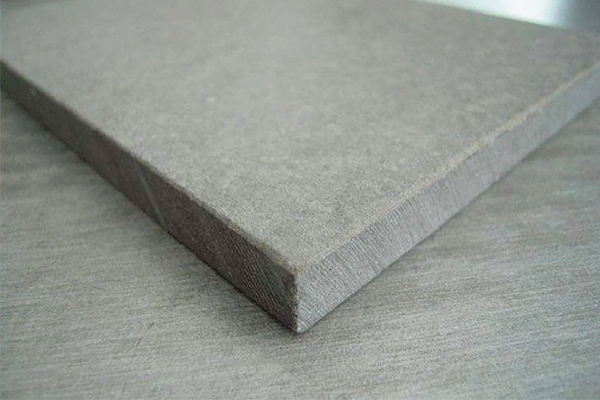
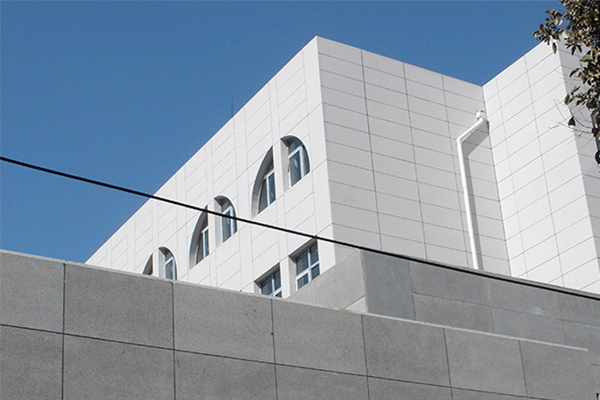


In 2017, the fiber cement board industry introduced a wave of new products, featuring multifunctionality and diverse color tones. These innovations have captured widespread attention, signaling emerging market demand trends for both the current year and the future of the industry.
What Are Fiber Cement Boards?
Fiber cement boards are inorganic, non-metallic green panels made from cement as the base material and adhesive, reinforced with mineral and other fibers. They are produced through processes such as pulping, molding, and curing. Known for their superior performance, these boards are widely used across various sectors of the construction industry.
Common Specifications:
(1) 1.2 m × 2.4 m
(2) 1.22 m × 2.44 m
Typical Thickness Range: 4–40 mm
In the domestic market, thickness can be extended from 2.5 mm to 90 mm. Standard board sizes are generally 1200 mm × 2400 mm or 1220 mm × 2440 mm—the former being the common domestic standard and the latter the international standard. (Smaller sizes can be custom-cut as needed.)
Features of Fiber Cement Boards:
Fire Resistance and Insulation: Rated Class A non-combustible; does not burn or emit toxic smoke in a fire. Low conductivity makes it an ideal insulating material.
Waterproof and Moisture-Resistant: Maintains structural stability in semi-exposed or high-humidity environments without sagging or deformation.
Thermal Insulation: Low thermal conductivity ensures excellent insulation performance. High density provides effective sound insulation.
Lightweight and High Strength: Pressed under high-tonnage hydraulic presses, the boards are strong, durable, and resistant to warping or deformation. Their lightweight nature makes them suitable for ceilings and roofing applications.
Easy Installation: Dry construction methods allow for quick and straightforward installation with keel systems. Deep-processed products offer further simplicity and enhanced performance.
Cost-Effective and Aesthetic: Lightweight properties reduce engineering and finishing costs when used with keel systems. Uniform color and smooth surface allow for cohesive architectural aesthetics.
Safe and Non-Toxic: Radiation levels are below national standards for building materials, comparable to background readings 20 meters from surrounding buildings.
Durable and Long-Lasting: Resistant to acid, alkali, corrosion, moisture, and pests. Strength and hardness increase over time, ensuring extended service life.
Versatile Processability: Can be easily cut, drilled, engraved, nailed, painted, or tiled, offering excellent adaptability for secondary decoration.
According to market research reports, innovation has become the key to addressing homogenization issues in the fiber cement board market. Currently, many industry players recognize the challenges posed by product similarity, which undermines fair competition and diminishes consumer experience, especially for mass-market products.
As Generations Y and Z increasingly dominate the consumer market, data shows that 90% of consumers prioritize design, while 87.2% favor "customized" features when selecting durable board products. Clearly, imitation and "customization" are conflicting market forces. This contradiction, however, serves as both a source and driver of industry development. Therefore, innovation by fiber cement board manufacturers is essential to resolving this tension and advancing the industry’s growth.
Anhui huachengxing building materials technology co., LTD. ©️ disclaimer ICP17001972号
design by:www.ibw.cn

