

Contact
We will contact you as soon as possible.



Introduction
Fiber cement boards and calcium silicate plates are common building and decorative materials in the market today, and their similar appearance and composition can often lead to confusion.
Calcium silicate board is produced by pulping siliceous and calcareous fibrous materials, followed by high-temperature chemical reaction molding.
Fiber cement board, on the other hand, is made from cement, fibers, and other raw materials through pulping, molding, and pressing under thousands of tons of pressure.
These are in fact two completely different products, with distinct industry standard codes:
Fiber cement pressure plate: JC/T412
Calcium silicate plate: JC/T564
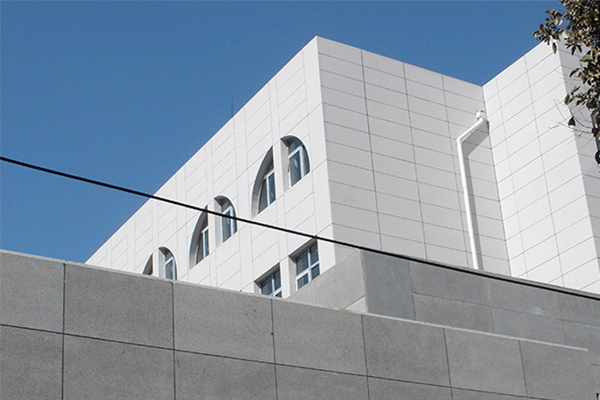
In interior decoration, fiber cement boards are generally chosen for exterior walls, while calcium silicate boards are preferred for interior walls. The latter is eco-friendly, free from harmful fibers and dust emissions, and contains no radiation, making it widely suitable for indoor wall applications.
Similarities Between Fiber Cement Pressure Plates and Calcium Silicate Plates
Similar raw materials, including silica powder, calcium, and fibers.
Both undergo pulping, sheet forming (or wet process), and molding.
Their appearance, shape, and length/width specifications are largely the same.
Overlapping areas of use, such as interior walls and insulation panels.
Key Differences Between Fiber Cement Pressure Plates and Calcium Silicate Plates
Calcium silicate board consists of siliceous materials (e.g., quartz powder, fly ash, diatomaceous earth), calcium materials (e.g., lime, cement), reinforcing fibers, and additives. It is produced through sheet forming, molding, and autoclave curing.
Fiber cement board uses cement as the base and binder, with mineral or other fibers as reinforcement, produced through pulping, molding, and curing. It can be categorized into asbestos or non-asbestos types, and further into pressed and non-pressed versions.
Density: Fiber cement pressure plates (~1.8 g/cm³) are denser than calcium silicate plates (~1.2 g/cm³).
Thickness range: Fiber cement pressure plates can be made from 2.5–100 mm, whereas calcium silicate plates generally range from 6–12 mm, and cannot be produced as ultra-thin (<4 mm) or ultra-thick (>30 mm) panels.
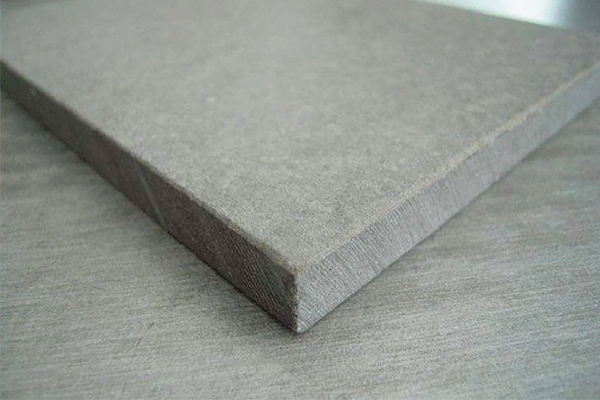
Color: Standard fiber cement pressure plates are cement-colored, while calcium silicate plates are typically white or gray-black.
Application: Due to higher density, toughness, tensile strength, and impact resistance, fiber cement pressure plates can be used for exterior cladding. Calcium silicate plates are not suitable for exterior siding.
How to Distinguish Between the Two
Estimate density: Calcium silicate plates are significantly lighter than fiber cement pressure plates.
Observe color: Fiber cement pressure plates have a natural, light gray cement tone. Some calcium silicate plates may be dyed dark to mimic fiber cement, but often appear unnaturally deep or black. Fiber cement boards also tend to have a smoother and brighter finish.
Inquire about product range: Ask if the manufacturer can produce ultra-thin or ultra-thick panels. If not, the product is likely calcium silicate board.
Factory visit: Check if autoclaves (steam curing tanks) are present. Plants with autoclaves but no heavy press typically produce calcium silicate boards. Those without either generally manufacture ordinary calcium silicate plates.
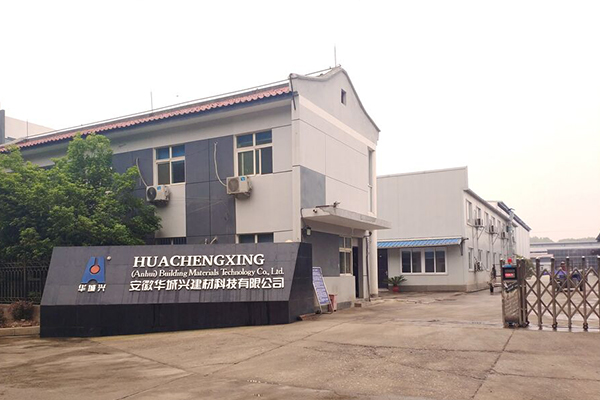
Huachengxing Building Materials’ calcium silicate board series adopts advanced production technology and precision processing, combining safety, reliability, high value, and excellent performance. Widely used in various building types, it offers high strength, large surface area, lightweight properties, along with fire resistance, moisture resistance, sound insulation, thermal insulation, and energy-saving features—making it an outstanding modern building and decorative material.
Anhui huachengxing building materials technology co., LTD. ©️ disclaimer ICP17001972号
design by:www.ibw.cn

