

Contact
We will contact you as soon as possible.

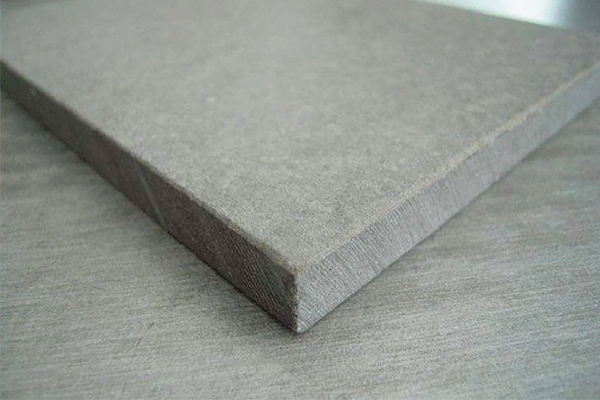
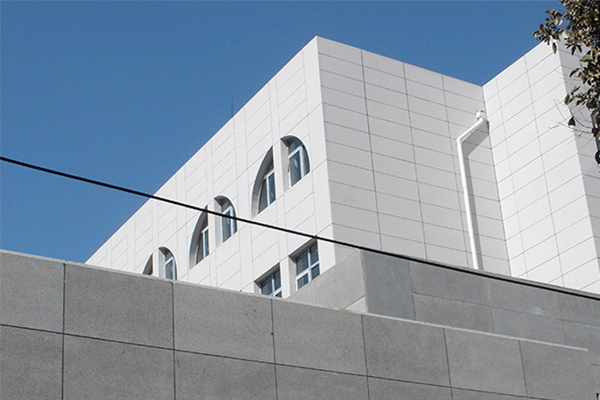


In recent years, to meet the needs of China’s construction, transportation and municipal construction, various new types of building materials have emerged. Large-scale construction projects and municipal infrastructure have also put forward higher requirements for product quality and supporting technologies. As a result, the production and application technologies of fiber cement board composite walls, which are used as fire partitions in high-rise and public buildings, have developed rapidly.
Perforated acoustic panel composite walls are lightweight wall materials made by compounding fiber cement boards as the surface layer with other thermal insulation materials through prefabrication or cast-in-situ methods. They can be divided into two categories: prefabricated fiber cement board composite wall panels and integral grouted fiber cement board walls. Fiber cement composite wall panels use thin fiber cement boards as the face sheets, filled with lightweight core materials such as expanded polystyrene lightweight concrete or expanded perlite concrete, and are integrally compounded and formed in one step using the grouped vertical formwork method.
Integral grouted fiber cement board walls are solid integral walls made by using fiber cement boards or calcium silicate boards as the surface layer, light steel keels as uprights, and then pumping lightweight grouting materials into their cavities. The face materials used for fiber cement composite wall panels are thin fiber cement boards or fiber-reinforced calcium silicate thin boards (with a thickness of 4mm or 5mm). The core material mainly adopts lightweight concrete mixture mixed with ordinary Portland cement, fly ash, expanded polystyrene particles, chemical admixtures and water. The production of composite panels adopts the grouting forming process with grouped vertical formwork.
Anhui huachengxing building materials technology co., LTD. ©️ disclaimer ICP17001972号
design by:www.ibw.cn

