Cutting, Drilling, Opening and Precautions for Perforated Acoustic Panels
Date:2019-04-08 Views:1562
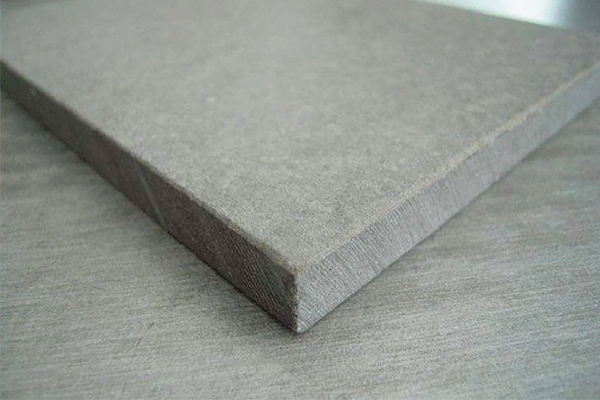
In the construction of fiber cement boards, secondary processing such as cutting, drilling and opening is often required. How to solve these problems and what precautions should be taken during processing?
1. Cutting
For manual cutting of perforated acoustic panels, a thin, hard metal saw is required. For large-volume cutting work, an electric saw is recommended. The cutting blade must be a straight-tooth blade made of tungsten carbide alloy, and dust extraction equipment should be used to remove dust during cutting.
2. Drilling
Perforated acoustic panels can be drilled with a handheld electric drill. To ensure the best results, the board should be supported at the back of the drilling position during drilling.
3. Mechanical Processing
Grooves, slots and other profiles can be made on perforated acoustic panels using a tenoning machine, router, or angle grinder. The feeding speed of the machine should be slower than when processing raw wood, and tools with tungsten carbide inserts must be used. Machinery for processing fiber cement boards must be equipped with high-efficiency dust collection equipment to minimize dust dispersion.
4. Opening
For small square or circular holes: Drill holes along the edge of the required opening with an electric drill, then carefully knock out the board at the opening. Irregular edges can be smoothed with a file. For rectangular holes only, pre-drill holes at the four corners of the opening first, then use electric tools to cut along the edge of the required opening.
For large regular rectangular holes: First, score a 3mm deep groove along the hole edge line with a utility knife. Then drill a large circular hole in the middle of the required opening, cut towards the corners of the opening, carefully knock out the fiber cement board at the opening, and smooth the edges with a file. Irregular fractures at curved corners can be smoothed with a half-round file.
Precautions
-
Do not use a sledgehammer or other destructive impact methods for opening, as this will damage the fiber cement board or cause other problems later.
-
Electric tools processing perforated acoustic panels will generate dust, just like cutting wood and other building materials. Workers must wear dust masks during operation to avoid inhaling dust. It is recommended to perform cutting outdoors or in a well-ventilated workplace, and use a cutting machine with a dust collection device as much as possible.
-
When cleaning the workplace, a vacuum cleaner must be used to remove dust, or the area should be sprinkled with water before sweeping to avoid the dispersion of cement dust.