1. Overview
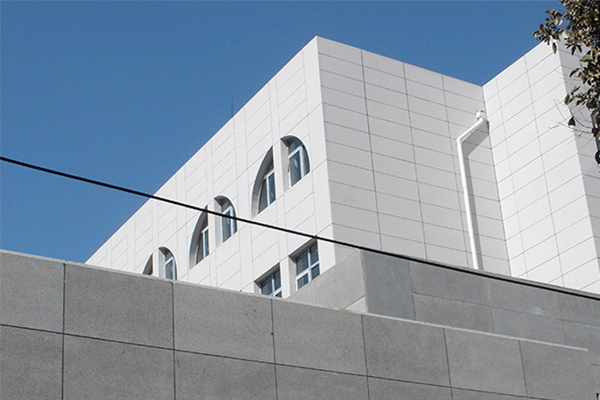
Using high-density fiber cement boards as exterior wall cladding, either to replace stone materials or used in combination with stone and curtain wall materials such as aluminum composite panels and PVC wall panels, has become a widely popular exterior wall construction practice.
The construction process for exterior wall cladding using fiber cement pressure boards is described as follows:
2. Material Requirements
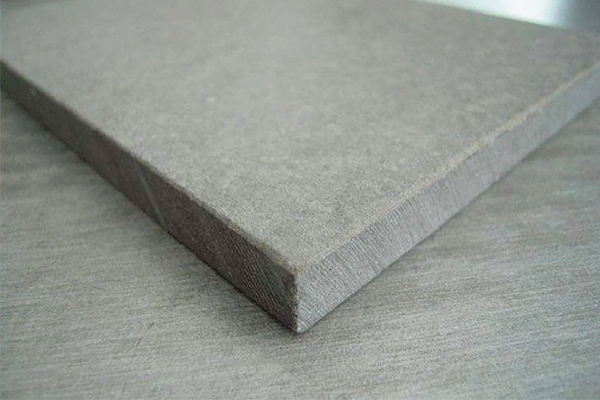
(1) Performance Requirements for Fiber Cement Pressure Boards
-
Fire Resistance and Insulation: Class A non-combustible. The boards do not burn or release toxic smoke in case of fire, and feature low electrical conductivity.
-
Waterproofing and Moisture Resistance: The boards maintain stable performance in semi-outdoor and high-humidity environments, without sagging or deformation.
-
Thermal and Sound Insulation: With low thermal conductivity, the boards provide excellent thermal insulation. High product density also delivers superior sound insulation performance.
-
Strength Requirement: Produced by a flat hydraulic press with a pressure capacity of approximately 5,000 tons, the boards shall feature high strength, resistance to deformation and warping.
(2) Dimensional Requirements
The length, width, thickness, right-angle accuracy and overall dimensions of fiber cement pressure boards shall conform uniformly to the design requirements.
(3) Color Requirements
The color and shade of fiber cement pressure boards shall meet the design specifications, maintain consistent coloring, and shall have no obvious color difference.
(4) Surface Treatment Requirements
The surface of fiber cement pressure boards shall be processed mechanically. After processing, the surface shall be cleaned with high-pressure water washing or water and soft brushes. Cleaning the boards with solvent-based chemical detergents is strictly prohibited.
(5) Metal Hanging Parts
Technical specifications and performance of metal hanging parts used for the finish of fiber cement pressure boards shall comply with the provisions of current national standards.
3. Pre-Construction Preparation
(1) The detailed construction drawings for dry-hanging fiber cement pressure boards on the wall have been reviewed and verified, and signed and confirmed by the design institute.
(2) Carrying capacity destructive tests and fatigue failure tests have been conducted on samples of hanging parts used for dry-hanging fiber cement pressure boards, with test data meeting the requirements of national codes and design specifications.
(3) Surveying, setting-out and line-marking works have been completed and accepted without defects.
(4) Scaffolding has been erected for substrate treatment, with complete hidden and pre-inspection records. Installation procedures may commence only after passing inspection.
(5) Water, electricity, mechanical and electrical installations, as well as embedded parts and preset fittings on walls, have been fully installed and passed hidden project acceptance.
(6) Doors and windows have been installed, with quality conforming to specified requirements.
(7) Prior to technical disclosure to construction workers, a sample panel section shall be constructed before large-scale installation. Construction by teams may be organized only after the sample section is certified qualified by the quality inspection department.
(8) All Jiude fiber cement pressure boards shall be fully sealed with concrete sealer.
4. Construction Technology
(1) Construction Flowchart
Structural surface cleaning → Marking vertical lines on the structure → Hanging two vertical steel wires at external corners → Drilling holes and installing expansion bolts → Installing angle steel fixings → Fixing vertical square steel tubes → Connecting horizontal angle steel → Connecting horizontal aluminum keels → Adjustment and fixing → Dry-hanging fiber cement pressure boards (with aluminum hanging parts pre-installed on the back of boards) → Horizontal and vertical alignment adjustment → Surface cleaning (sealant application at panel joints of columns)
(2) On-Site Material Receipt
A dedicated person shall be assigned to manage material receipt. Careful inspection shall be conducted to verify the specifications, models of materials against the delivery list.
Fiber cement pressure boards with obvious inconsistent dimensions or colors shall be stacked separately for return to the manufacturer. Boards with cracks, chipped edges or corners may be reused only after repair; severely damaged boards shall be rejected.
The stacking yard for fiber cement pressure boards shall be level, paved with continuous 10cm×10cm wooden battens to raise the boards more than 8cm above the ground. Rubber strips are recommended to be nailed onto the wooden battens.
Boards shall be leaned vertically against a special steel frame at an angle of 75°. Each board shall be separated by plastic film and tightly stacked to prevent adhesion and tilting.
(3) Preparation of Fiber Cement Pressure Boards
First, select and classify boards by color using colorimetry. The color of fiber cement pressure boards used in the entire atrium area shall be consistent.
In accordance with design dimensions and drawing requirements, install matching aluminum hanging parts for dry-hanging on the back of each board. A total of 6 aluminum hanging parts per board is specified (for maximum panel size 2780×1220mm).
To ensure accurate and vertical positioning of aluminum hanging parts, cross lines shall be pre-marked on the back of fiber cement pressure boards at intervals of 600mm corresponding to the vertical spacing of horizontal keels, and equally divided along the length of the board. Matching aluminum fasteners shall be fixed at the intersections using stainless steel screws of 10mm in length and 4mm in diameter.
After installation, recheck the horizontality and verticality of all aluminum hanging parts.
(4) Substrate Preparation
Clean the substrate surface designated for dry-hanging fiber cement pressure board cladding. Conduct vertical alignment, squaring and dimension setting, and mark vertical and horizontal lines.
According to design drawings and actual site conditions, mark positioning lines and panel division lines for the installation of fiber cement pressure board keels. Remove dust and dirt thoroughly from the wall surface.
(5) Line Hanging
Prior to keel installation, set vertical control lines on both faces of external corners using a theodolite as required by design drawings. It is recommended to mark the lines 20cm away from external corners for convenient real-time verification and smooth installation.
Vertical control lines shall adopt steel wires with a diameter of ∮1.0–∮1.2, weighted at the lower end with 8–10kg iron weights. The upper ends shall be hung on a special angle steel frame fixed with expansion bolts at the top of the north and south external corners of the atrium.
The lines must be secured at firm, accurate and collision-resistant locations, with proper protection and regular inspection. Mark the upper and lower ends of the control lines for reference.
(6) Keel Installation
Fix 50×50×4 angle steel (with adjustable holes) onto the structural surface in advance using ∮8 expansion bolts. The horizontal spacing of the angle steel and the attached 50×50×3.5 vertical square steel tubes is 800mm.
During installation, the verticality of square steel tubes shall be verified by top-down suspended steel wires.
After vertical square steel tubes are fixed, install connecting angle steel and horizontal aluminum keels, with a vertical spacing of 600mm between horizontal aluminum keels.
Connections between angle steel, square steel tubes and horizontal keels shall use ∮10 bolts.
Upon completion of keel installation, use an infrared level to check the horizontality of horizontal aluminum keels, and suspended steel wires to verify verticality. Adjust deviations promptly to minimize errors.
(7) Panel Installation
Hang prefabricated panels onto the keel system in accordance with the layout drawings provided by the design institute. Panels are connected to the keels via matching aluminum hanging parts for fiber cement pressure boards.
Lightly hang fiber cement pressure boards of the same horizontal course onto the keels first. Adjust the horizontality and verticality using full-height vertical steel wires and full-length horizontal lines. Check panel joints to ensure uniform width in compliance with design requirements.
Once qualified, fasten the matching aluminum hanging parts with stainless steel screws of 20mm in length and 6mm in diameter, then proceed with the installation of upper-course panels.
(8) Panel Joint Treatment
In accordance with the design intent, panel joints of fiber cement pressure boards on the entire east wall shall remain open and untreated, with vertical joints 20mm wide and horizontal joints 10mm wide.
Therefore, strict inspection of the horizontality and verticality of joints shall be enforced during preceding construction to ensure straight and aligned joints.
(9) Isolated Column Treatment
External corners at isolated column turns shall be mitered at 45° and polished smooth. The structural surface of columns facing the corridor shall be installed using the full-bonding method.
45° miter joints shall be filled with a mixture of fiber cement board powder and adhesive, then coated twice with special coating for fiber cement boards. Ensure the joint filling is uniform and compact.
(10) Surface Cleaning and Topcoat Application
Wipe fiber cement pressure boards clean with cotton yarn. Stubborn glue or adhesives may be gently removed with a putty knife, then wiped clean with acetone-dampened cotton yarn.
Prepare the topcoat agent according to the mixing ratio half an hour before application, distinguishing between primer and finish coat. Staged application is recommended.
Stir the prepared topcoat agent thoroughly to avoid uneven film formation. Apply with a wool brush, avoiding excessive coating to prevent runs. Minimize re-brushing to avoid brush marks. The finished surface shall be free of bubbles, missing areas, smooth and glossy.
Precautions
The cross-sectional dimensions of hanging parts, angle steel keels and connectors shall be adjusted according to the size of fiber cement pressure boards to ensure the installed panels are horizontally straight and vertically aligned.
All angle steel and steel plates shall be hot-dip galvanized or coated with anti-rust paint.