5. Quality Standards
(1) Dominant Control Items
① The variety, specifications, performance and grade of materials used for dry-hanging high-density fiber cement board wall surfaces shall conform to the design requirements, current national product standards and engineering technical codes.
② The molding, vertical division, color and luster of the dry-hanging fiber cement pressure board wall surface shall meet the design requirements.
③ The position and quantity of embedded parts and post-installed anchors on the main structure of the dry-hanging fiber cement pressure board wall, as well as the pull-out strength of post-installed anchors, must comply with the design requirements.
④ The connections between the metal frame of the dry-hanging fiber cement pressure board wall and the embedded parts of the main structure, the connections between vertical mullions and horizontal beams, the connections between connectors and the metal frame, and the connections between connectors and panels must meet the design requirements and be firmly installed.
⑤ The anti-corrosion and anti-rust treatment of the metal frame and connectors shall conform to the design requirements.
⑥ The lightning protection device of the dry-hanging fiber cement pressure board wall must be reliably connected to the lightning protection system of the main structure.
⑦ The joints of various structural expansion joints and wall corners shall comply with the design requirements and relevant technical standards.
⑧ The treatment of fiber cement pressure board surfaces and panel joints shall meet the design requirements.
⑨ The sealant applied at panel joints of the dry-hanging fiber cement pressure board wall shall be full, compact, continuous, uniform and free of bubbles. The width and thickness of panel joints shall conform to the design requirements and technical standards.
(2) General Items
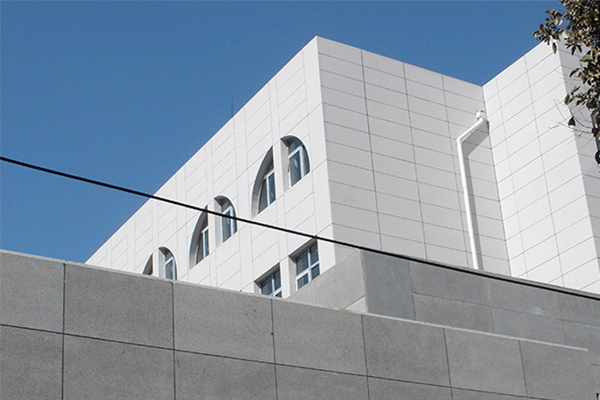
① The surface of the dry-hanging fiber cement pressure board wall shall be flat, clean, free of contamination, defects and cracks.
② The joints of the dry-hanging fiber cement pressure board wall shall be tight and the panels shall be firmly installed.
③ The stone joints shall be horizontal and vertical with uniform width; the pressing direction of fiber cement pressure boards at internal and external corners shall be correct, and board edges shall be aligned straight. The protruding thickness of molded lines from the wall shall be consistent, with straight upper and lower edges and neat board ends.
④ The sealant on the dry-hanging fiber cement pressure board wall shall be horizontal and vertical, with consistent depth, uniform width, smooth and straight appearance.
⑤ The allowable deviations and inspection methods for the dry-hanging fiber cement pressure board wall shall comply with the following provisions: Item 1: Verticality of elevation, allowable deviation 2mm, inspection method: Check with a 2m verticality testing ruler. Item 2: Surface flatness, allowable deviation 2mm, inspection method: Check with a 2m straightedge and feeler gauge. Item 3: Squareness of internal & external corners, allowable deviation 2mm, inspection method: Check with a right-angle testing ruler and feeler gauge. Item 4: Straightness of joints, allowable deviation 2mm, inspection method: Check with a 5m wire (full wire if less than 5m) and steel ruler. Item 5: Straightness of plinth top edge, allowable deviation 2mm, inspection method: Check with a 5m wire (full wire if less than 5m) and steel ruler. Item 6: Height difference at joints, allowable deviation 0.5mm, inspection method: Check with a steel ruler and feeler gauge. Item 7: Width deviation of joints, allowable deviation 1mm, inspection method: Check with a steel ruler.
6. Finished Product Protection
⑴ Reliable anti-pollution measures shall be taken for installed panels. Contaminants left on door and window frames, glass and metal decorative panels shall be wiped off in a timely manner. Especially during sealant application, protective films shall be pasted on both sides of the joint to prevent contamination.
⑵ The construction sequence shall be reasonably arranged. Construction of specialized trades (water, electricity, ventilation, etc.) shall be carried out in advance, and panel installation shall be conducted only after passing hidden project acceptance, so as to avoid damage and pollution to the external hanging panels.
⑶ After panel installation, blockboard shall be used to protect the edges and corners to prevent damage from collision.
⑷ Construction personnel of other trades shall take care not to collide, scratch or damage the fiber cement pressure board panels.
7. Conclusion
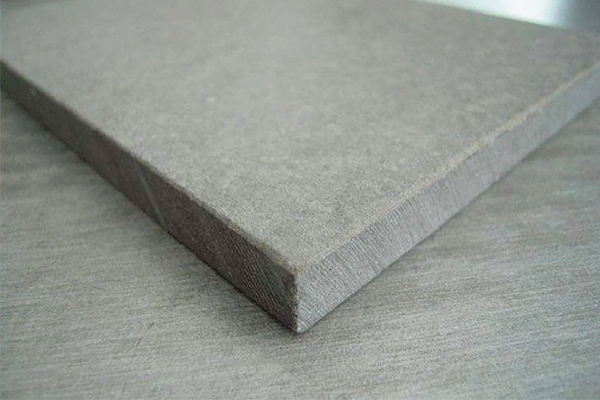
The application of Jiude fiber cement pressure boards for wall cladding provides the following major advantages: ⑴ Lightweight and easy to install. Cooperating with the keel system, it effectively reduces engineering and decoration costs. With uniform appearance color and flat surface, direct application can achieve consistent color and texture on the building facade. ⑵ Resistant to acid, alkali and corrosion, free from damage caused by moisture, insects or termites. Meanwhile, its strength and hardness increase over time, ensuring an ultra-long service life. ⑶ High wall surface flatness with almost zero thickness tolerance. Decorative works such as painting, coating and pasting can be carried out directly after panel installation without plastering. ⑷ The board dimensions and specifications can be freely adjusted according to the length and width of the wall surface. ⑸ The adoption of open joints ensures an attractive appearance and avoids cracking.
As the exterior wall of this project is fair-faced concrete, the interior application of fiber cement pressure board cladding achieves a consistent and aesthetic effect between the interior and exterior walls.
The construction technology of fiber cement pressure boards is an advanced high-end technology in the current construction industry. It can meet energy-saving targets in different stages and fields, and also fulfills the requirements of reducing wall weight, saving energy and land, improving production efficiency, and enhancing building functions.