

Contact
We will contact you as soon as possible.


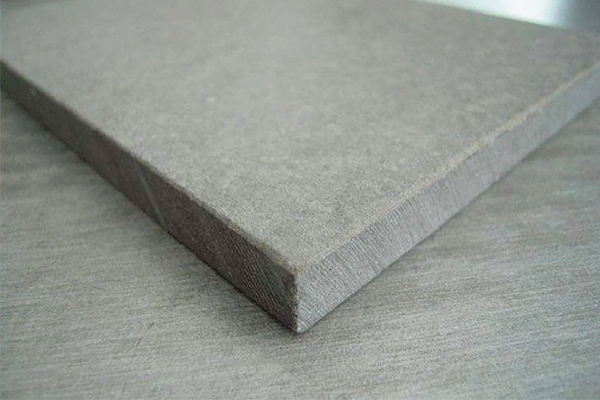
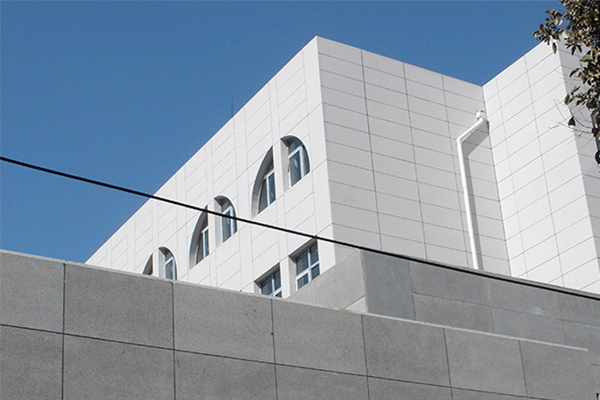


Fiber cement board is widely used by construction and decoration companies due to its excellent material properties and superior panel performance. These boards can be classified in several ways—by fiber type, density, pressing method, and thickness. For those who are less familiar with this material or its installation process, this article will provide a clear overview of its classifications and key installation steps.
 I. Classification of Fiber Cement Boards
1. By Fiber Type
Fiber cement boards can be divided into asbestos and non‑asbestos types. In China, paper fiber is currently the most commonly used material. These boards are widely applied in functional fire‑resistant and waterproof partition lining systems.
2. By Density
Low density: 0.9–1.2 g/cm³
Medium density: 1.2–1.5 g/cm³
High density: 1.5–2.0 g/cm³
Low‑density boards are typically used in ordinary ceilings and partition walls. Medium‑density boards are suitable for mid‑range partition walls and ceilings. High‑density boards are recommended for high‑end building applications such as steel‑structure exterior walls and floors.
3. By Pressing Method
Fiber cement boards are classified as either pressed or non‑pressed. Medium‑ and low‑density boards are generally non‑pressed, while high‑density boards are pressed.
4. By Thickness
Ultra‑thin board: 2.5–3.5 mm
Standard board: 4–12 mm
Thick board: 13–30 mm
Ultra‑thick board: 31–100 mm
II. Installation Steps for Fiber Cement Boards
1.For fire‑rated fiber cement boards, install the panels vertically—that is, with the long side parallel to the vertical studs. Fix only the flat side of the panel to the stud, ensuring it aligns with the center of the stud flange. Do not attach the board directly to the top track or floor track.
2.For non‑fire‑rated applications, panels may be installed either vertically or horizontally.
3.When used in ceiling applications, ensure the long side of the panel is straight and level with the vertical studs.
4.Pre‑drill holes before nailing. If nailing directly, place nails slightly away from the panel edge to prevent cracking.
5.Fastening methods vary by supporting structure:
For wood studs: use round nails or wood screws.
For light‑gauge steel studs: use self‑tapping screws.
For non‑metal substrates (e.g., asbestos‑cement studs): use expansion screws.
To ensure a level surface and improve sound insulation, place a ribbed rubber pad between the fiber cement board and the stud.

This concludes our introduction to the process classification and specific installation steps of fiber cement boards. We hope this article helps you better understand this versatile material.
Anhui huachengxing building materials technology co., LTD. ©️ disclaimer ICP17001972号
design by:www.ibw.cn

