

Contact
We will contact you as soon as possible.
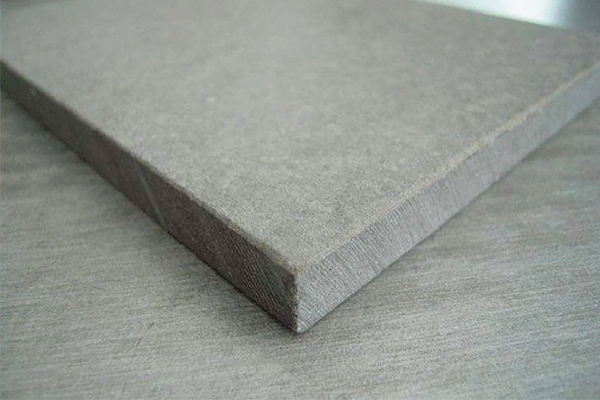


Fiber cement boards are manufactured using high-grade cement as the base material, supplemented with mineral fibers and other reinforcing fibers. The production process involves pulping, molding, curing, and other steps using specialized equipment.
Common specifications include: thickness ranging from 5–25 mm, a width of 1220 mm, and a length of 2440 mm. Different thicknesses are available to suit various applications.
Boards with standard thickness are often used for wall cladding, interior partitions, and attic flooring. So, what are the main functions of fiber cement boards? Here are their key features—let’s take a look!

What Are the Functions of Fiber Cement Boards?
Based on density variations, fiber cement boards can be categorized into high-density, medium-density, and low-density boards. Generally, the higher the density and thickness, the better the thermal and sound insulation performance. Additionally, equipment rooms and distribution rooms require materials with strong insulation properties.
Fiber cement boards are not only flame-retardant but also boast a fire resistance rating of up to A1. They exhibit high strength, resistance to deformation, and the ability to withstand load-bearing pressure. With high compactness and excellent sound insulation, these boards offer a long service life. Commonly used in partitions, fireproof panels, acoustic walls, and other insulation applications, fiber cement boards are considered an ideal building material.
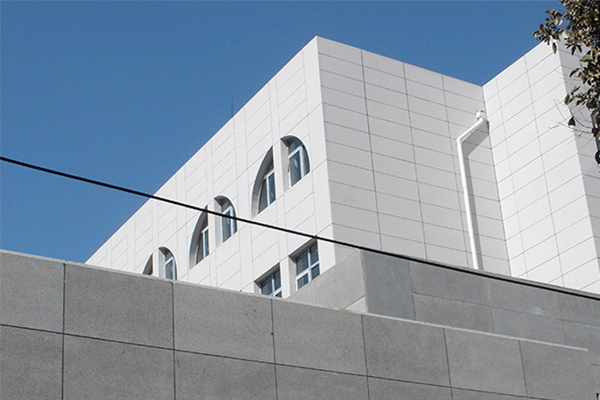
The thickness of fiber cement boards ranges from 5mm to 25mm, with a standard width of 1.22 meters and length of 2.44 meters. Thinner boards are suitable for ceiling materials, while thicker ones are ideal for attic flooring and exterior wall cladding.
Fiber cement boards are well-suited for decorative purposes, wall systems, interior partitions, and more. Their fire-resistant and insulating characteristics make them an excellent choice for environments requiring flame retardancy—such as power plants and chemical plants—while their insulation properties also lend themselves effectively to interior applications.

Fiber Cement Boards Offer the Following Key Features:
Fiber cement boards are classified as Class A fire-resistant materials. They are non-combustible and do not emit harmful gases when exposed to fire. Additionally, these boards remain stable and do not warp, even in humid conditions.
With their high density, fiber cement boards provide excellent sound insulation and thermal insulation, making them an ideal building material sought after in modern construction.
These boards are characterized by high strength and resistance to deformation, capable of bearing significant load pressure, which makes them highly practical for structural applications.
Fiber cement boards offer attractive decorative finishes and are cost-effective. Considering their long service life, they represent excellent value for money.
Fiber cement boards deliver multiple performance benefits, including moisture resistance, water resistance, sound insulation, thermal insulation, and fire resistance. They are easy to install, economically priced, and aesthetically pleasing. Made from eco-friendly and safe materials, they are also corrosion-resistant, acid- and alkali-resistant, and unaffected by insects or ants. This makes them particularly suitable for use in various settings such as shopping malls, hotels, office buildings, train stations, theaters, factories, and residential buildings.

What is the role of fiber cement board? It has these characteristics of the content, if you do not understand anything, you can consult us to understand.
Note: Part of the picture source network, if there is infringement, please contact to delete!
Anhui huachengxing building materials technology co., LTD. ©️ disclaimer ICP17001972号
design by:www.ibw.cn

