

Contact
We will contact you as soon as possible.



To understand a product, it is essential to first consider its materials and applications. So, what is fiber cement board made of, and where can it be used?
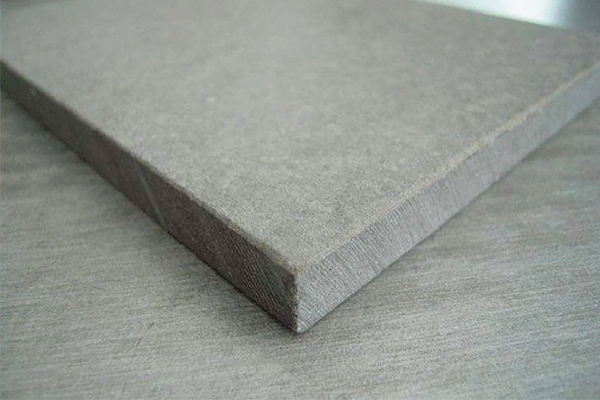
Fiber cement board is manufactured from cement, sand, and slurry through a series of industrial processes. As a cement-based product, its service life matches that of the building itself. In addition, fiber cement board offers multiple advantages, including fire resistance (reaching Class A1 rating), flame retardancy, corrosion resistance, durability, waterproofing, moisture resistance, and easy cutting and splicing.

Where Can Fiber Cement Board Be Applied?
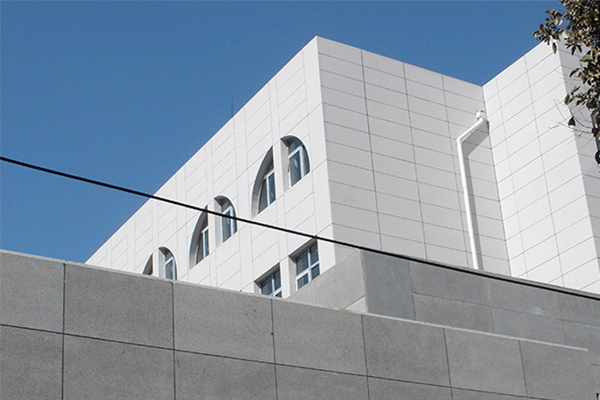
As a cement-based product, fiber cement board has a service life equivalent to that of the building itself. Additionally, it offers advantages such as fire resistance, flame retardancy, corrosion resistance, weather resistance, waterproofing, moisture resistance, and the flexibility of being cut and spliced as needed. Its fire performance meets Class A1 standards.
Fiber cement board can be used in workshops, factories, firewalls, container flooring, power distribution boxes, and more. Installation is straightforward. For example, in a workshop with a steel framework, the board is first placed onto the keel according to the layout. It is important to ensure that the joints of two adjacent boards do not rest on the same keel simultaneously. The board is then secured using cement nails or self-tapping screws. It can be cut and spliced according to construction drawings or on-site requirements, making installation highly convenient.

Fiber Cement Board Specifications
By Density Classification:
Fiber cement boards are categorized by density as follows:
Low Density: 0.9–1.2 g/cm³
Medium Density: 1.2–1.5 g/cm³
High Density: 1.5–2.0 g/cm³
Low-density boards are typically used in ceiling and partition applications in low-grade buildings. According to current national construction industry standards in China, fiber cement boards are divided into two main categories. It is worth noting that high-density boards are prone to deformation, while medium- and low-density products generally exhibit lower deformation coefficients.
Dimensions:
Standard Length & Width: 1200×2400 mm and 1220×2440 mm. Some manufacturers also offer customized lengths ranging from 2000 to 3000 mm upon request.
Thickness Range: Commonly available in 6, 8, 10, 12, 15, 18, 24, and 30 mm, with widths typically between 1000 and 1250 mm. Custom thicknesses from 2.5 to 100 mm are also available.
Thickness Classification:
Less than 4 mm: Thin Board
4–12 mm: Standard Board
15–30 mm or more: Thick Board
Over 30 mm: Extra-Thick Board
Boards with a thickness of 4–6 mm are classified as thin boards. Compared to thicker boards, thin fiber cement boards are more prone to breakage and require careful handling during transport and prior to installation. Lack of proper protection may easily lead to damage.

This concludes our introduction to the applications and specifications of fiber cement board. For more detailed information, please stay tuned for our upcoming articles.
Note: Some images are sourced from the internet. Please contact us for removal if any copyright infringement is involved.
Anhui huachengxing building materials technology co., LTD. ©️ disclaimer ICP17001972号
design by:www.ibw.cn

