Product Features of Asbestos-Free Fiber Cement Boards
Date:2019-04-08 Views:1653
Asbestos-Free Fiber Cement Boards
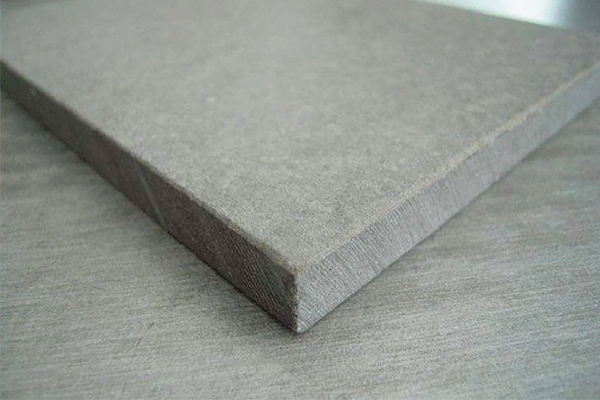
Asbestos-free fiber cement boards, also referred to as fiber cement pressure boards or cement fiber pressure boards, are a new type of building panel manufactured using natural fibers and cement as raw materials. They are produced through a series of processes including pulping, forming, cutting, pressing and curing. As a new generation of green building materials, they boast exceptional environmental-friendly properties in addition to excellent moisture resistance and fire resistance.
These boards are a novel construction material fabricated with siliceous materials and calcareous materials as the primary base materials, cellulose fibers as the reinforcing agent, and other auxiliary materials as additives. They are formed via the Hatschek process and cured under high pressure.
Product Features of Asbestos-Free Fiber Cement Boards
-
Fiber cement boards are characterized by their light weight, high strength, water resistance, corrosion resistance, fire resistance, large format, good processability, and the ability to significantly improve construction efficiency.
-
The panels are highly workable. They can be sawn, drilled, carved, nailed, painted, and tiled, wall cloth and other decorative materials can also be attached to them according to actual construction requirements.
-
The boards are acid and alkali resistant, corrosion resistant, and immune to damage caused by moisture, insects and termites.
Application Fields of Asbestos-Free Fiber Cement Boards
As a new type of eco-friendly building material, asbestos-free fiber cement boards not only fulfill all the functions of traditional gypsum boards, but also offer superior fire resistance, excellent moisture resistance and an exceptionally long service life.
They are extensively used in suspended ceilings and partition walls in commercial and industrial construction projects. They also serve as liners for home decoration and furniture, backboards for billboards, bulkheads for ships, shed boards for warehouses, raised access floor panels, and wall panels for indoor projects such as tunnels.
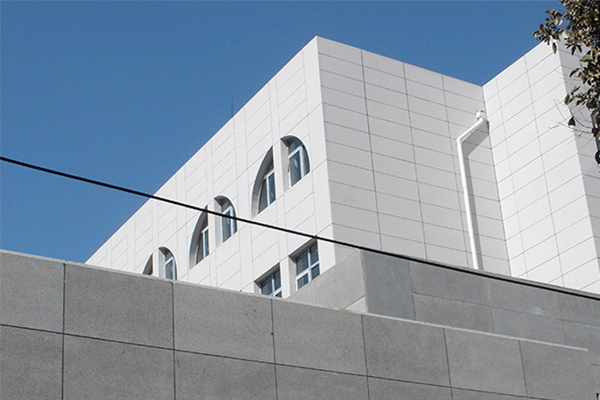
Moreover, they are widely applied in both civil and industrial buildings, and can be utilized in various building components including floor slabs, interior wall panels, exterior wall panels, ceiling panels, curtain wall backboards, composite wall panels, insulation materials and roof decking.