Construction Recommendations for Explosion-Proof Boards
Date:2019-04-08 Views:1645
Construction Recommendations for Explosion-Proof Boards
1. Installation and Fixing of Keels
(1) Trim and level any uneven areas on the floor, ceiling and walls where the keel frame is to be installed.
(2) Snap layout lines on the floor and ceiling in accordance with the design drawings to mark the positions of the top (floor) runners. At the same time, mark the locations of doors, windows, sanitary fixtures, pipelines and wall openings.
(3) Secure the top (floor) runners with powder-actuated fasteners or expansion bolts. The horizontal spacing of powder-actuated fasteners or expansion bolts shall be no more than 800 mm, and the distance from each fixing point to the wall end shall be 100 mm.
(4) Insert the studs into the top (floor) runners and fasten them with blind rivets at a spacing of 610 mm. Generally, studs are 5 mm shorter than the clear height of the partition wall. Ensure that the openings of all studs face the same direction and are not inverted upside down, so that the pre-drilled holes on the studs are aligned on the same horizontal plane.
(5) Check and correct the verticality of the studs using a plumb bob.
(6) Install reinforced keels – composite structures consisting of studs and top (floor) runners – at door and window frames, free ends of walls, wall joints, and both sides of large wall openings.
(7) Install horizontal bracing keels at a wall height of 2400 mm, which corresponds to the horizontal joints of the boards.
(8) Install additional supporting members at locations where suspended equipment is to be mounted to facilitate equipment fixation.
(9) Install concealed pipelines, sockets and internal infill materials (e.g., rock wool, as specified in the design). If holes need to be drilled on studs, the diameter of each hole shall not exceed two-fifths of the keel width.
(10) Conduct acceptance inspections in accordance with relevant building construction codes. Verify the dimensions, verticality, integrity and stability of the keel frame. Installation of explosion-proof boards can only commence after the inspection is approved.
2. Installation and Fixing of Explosion-Proof Boards
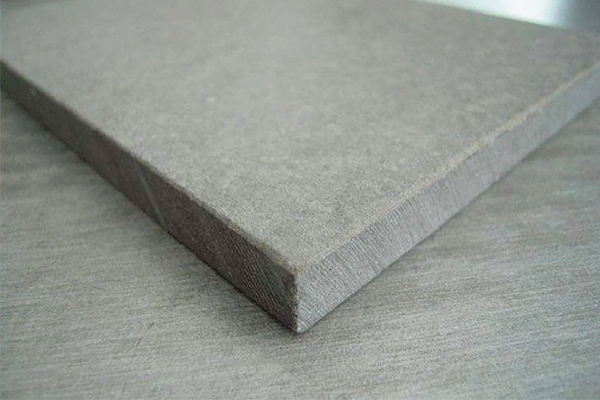
(1) Cut and drill holes in the boards according to the design drawings and actual construction conditions. Perform on-site chamfering if necessary. Both long edges of explosion-proof boards are factory-chamfered. However, if the wall height exceeds 2400 mm, the short edges at horizontal board joints must be chamfered on site to achieve better joint treatment.
(2) Snap lines on the surface of explosion-proof boards to mark the fixing points for self-tapping screws, and pre-drill countersink holes at these points. The diameter of each countersink hole shall be 1 mm to 2 mm larger than the screw head, with a hole depth of 1 mm to 2 mm. The self-tapping screws shall be 15 mm away from board edges, 50 mm away from board corners, and spaced 200 mm to 250 mm apart.
(3) When installing boards on partition walls, adopt longitudinal installation by default: fix the long edges of the boards to the studs. Butt adjacent boards gently without forced pressing. The joints on both sides of the partition wall shall be staggered and shall not be positioned on the same stud.
(4) Pre-drill holes on both the explosion-proof boards and keels before fixation. The diameter of each pre-drilled hole shall be 1 mm smaller than that of the self-tapping screws. Secure the explosion-proof boards with self-tapping screws, starting from the center of each board and working towards the edges. All screw heads shall be countersunk 1 mm below the board surface.