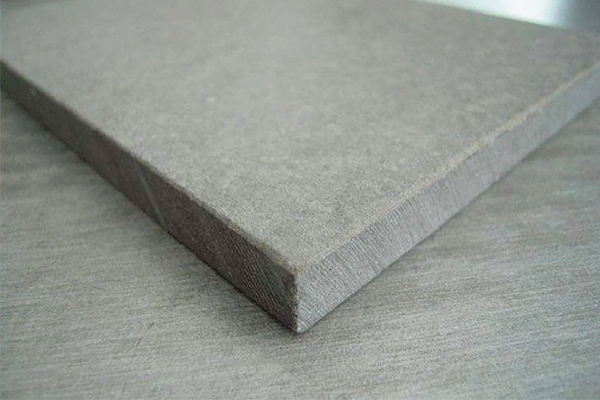
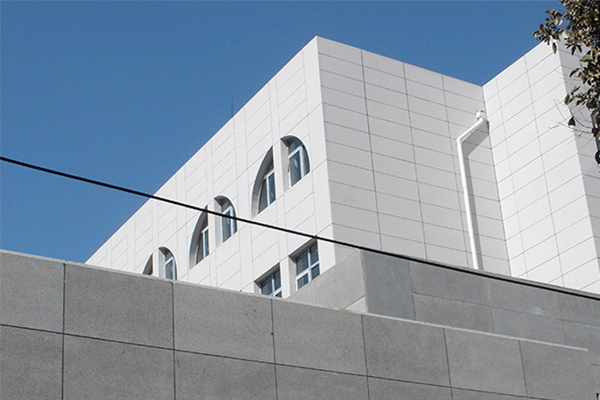
Asbestos-free fiber cement board is a type of panel manufactured by using non-asbestos inorganic mineral fibers, synthetic organic fibers or cellulose fibers, either singly or in combination, as reinforcing materials. Ordinary Portland cement is adopted as the binding material, or part of the cement is replaced by siliceous and calcareous materials (the total dosage of siliceous and calcareous materials shall not exceed 80% of the total binding materials). The board is produced through pulping, forming, and curing via steam or high-pressure steam.
The Development of Asbestos-Free Fiber Cement Boards Abroad
Internationally, fiber cement board is a medium-to-high grade decorative material, widely used in economically developed regions such as the United States, Europe, Japan and other countries and regions.
The most prominent feature of well-known foreign brands of fiber cement boards lies in their diverse product ranges, versatile applications, and varied surface colors and textures, providing users with a wide selection. As a result, these products enjoy strong market competitiveness.
Prospects for Asbestos-Free Fiber Cement Boards in China
Drawing on advanced foreign experience, the sound development of asbestos-free fiber cement board products requires a forward-looking strategy. Specifically, on the basis of existing applications, efforts should be made to further expand the application fields and deepen the application scope of the products.
Today, we focus on three promising development directions for this product.
1. Cladding Panels for Energy-Efficient Building Exteriors
Autoclaved fiber cement boards with high density, high strength and sprayed surface can be composited with thermal insulation materials to form a dry-type exterior wall insulation system. This system can reduce heat loss through building envelopes, lower energy consumption during operation, cut greenhouse gas emissions, and improve indoor living comfort.
According to practical experience in Europe and the United States, compared with wet plastering systems, this dry cladding system, despite a relatively higher initial cost, features faster construction, suitability for year-round installation, high operational reliability and low maintenance costs. It can be applied not only to new energy-efficient buildings but also to the energy-saving renovation of existing buildings.
2. Fire-Resistant Boards for Passive Fire Protection Systems
High-rise and super high-rise buildings, public buildings, underground structures and similar constructions impose strict requirements on fire safety. Fiber cement boards produced with special formulations and processes feature excellent fire resistance and are widely used internationally in firewalls and suspended ceilings, fire protection cladding for steel structures, self-supporting fire-resistant air ducts, fireproof cladding for sheet metal ducts, fireproof encapsulation for cables, fireproof spandrels for glass curtain walls, pipe shafts, smoke barriers and other applications.
3. Cast-in-Situ (or Prefabricated) Lightweight Composite Wall Panels
Lightweight grout made of foam plastic particles, cement, fly ash and other ingredients can be pumped into the cavity formed by autoclaved fiber cement face panels and light steel keels, creating a cast-in-place, solid lightweight composite wall.
This wall system was first adopted in Taiwan, China. Its main advantages include satisfactory thermal insulation and sound insulation performance, the solid texture of traditional walls, convenient construction, environmental friendliness, and the ability to support heavy loads on the wall surface.
In the 9.21 earthquake that struck Taiwan, China in 1999, numerous buildings collapsed or suffered severe damage, while this type of wall remained largely intact. Consequently, it has been extensively applied in construction projects in Taiwan. In recent years, mainland China has begun to adopt this wall structure in a number of buildings. It is recommended that relevant technical specifications be improved as soon as possible, mass production be organized, and the lightweight composite wall be prioritized for promotion in buildings located in earthquake-prone regions.
According to foreign experience, the service life of autoclaved fiber cement wall panels that meet quality standards, are properly installed, reasonably used and timely maintained is generally no less than 50 years. Autoclaved fiber cement boards and calcium silicate boards used indoors can normally achieve a service life of more than 50 years.
At the end of their service life, most of these boards will be damaged during dismantling and are therefore unsuitable for reuse. Most of the waste boards can be recycled as raw materials for cement clinker production, and part of them can be used as admixtures in the manufacture of autoclaved fiber cement boards.
It is hoped that Chinese manufacturers of autoclaved fiber cement boards will take more effective measures in terms of raw materials, production and application to enhance the sustainability of such products. They are encouraged to vigorously develop low-carbon technologies, enrich product varieties, and actively expand the breadth and depth of application fields for new building materials. By providing more high-performance autoclaved fiber cement boards for both domestic and international construction markets, the industry will promote the sustained and healthy development of the asbestos-free fiber cement board sector.