

Contact
We will contact you as soon as possible.


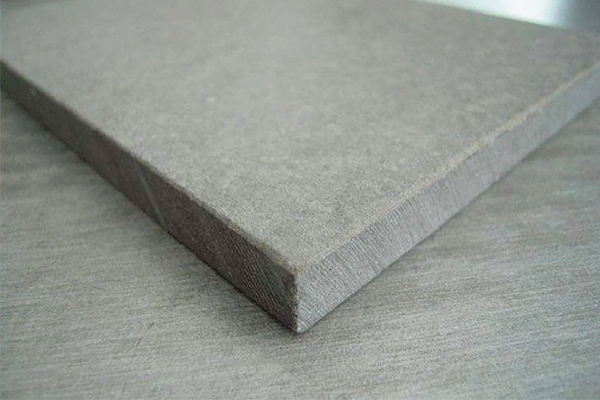



Nowadays, explosion-proof boards are widely used in industrial buildings to protect property and personnel safety. However, few people know how they are actually installed in factory settings. Today, let’s walk through the installation process of explosion-proof boards in industrial construction.
Explosion-proof boards are specifically designed for blast protection in buildings. They are composed of galvanized steel plates and fiber-reinforced cement, forming a high-strength, explosion-resistant panel. These boards can be described as intelligent, modern, and highly practical. So, how should they be installed in industrial environments?
(1) Surface Preparation
Level and smooth the floors, ceilings, and walls where the stud framework will be installed.
(2) Layout and Marking
Following the design plan, mark the positions of the top and bottom runners on the floor and ceiling, and indicate locations for doors, windows, fixtures, pipes, and openings.
(3) Fix Runners
Secure the top and bottom runners using shot pins or expansion bolts, with a horizontal spacing of ≤800 mm and a distance of 100 mm from the wall ends.
(4) Install Studs
Insert vertical studs into the runners. Space them at 610 mm intervals and fasten with blind rivets. Studs are typically cut 5 mm shorter than the clear wall height. Ensure all stud openings face the same direction and are not inverted, keeping the perforations on the same horizontal level.
(5) Check Vertical Alignment
Use a plumb bob to verify the vertical alignment of the studs.
(6) Reinforce Openings
At door/window frames, free ends of walls, connection points, and around large openings, install additional reinforcement studs—composite sections combining vertical studs and runners.
(7) Install Horizontal Bracing
At 2400 mm above floor level (i.e., at panel horizontal joints), install horizontal bracing studs.
(8) Support for Mounted Equipment
Provide additional supports at locations where equipment will be suspended to ensure secure mounting.
(9) Route Utilities and Add Insulation
Install concealed wiring, outlets, and insulation material (e.g., rock wool, as specified in the design). If holes are drilled in studs, the diameter should not exceed 2/5 of the stud width.
(10) Inspect Framework Before Board Installation
Conduct inspection according to relevant construction standards to verify dimensions, vertical alignment, structural integrity, and stability of the framework. Only proceed with explosion-proof board installation after the framework passes inspection.
We have summarized the above installation steps to help ensure proper and safe construction. Installing explosion-proof boards correctly not only safeguards property and lives but also delivers an aesthetically pleasing, fire-resistant finish—creating a safe, comfortable, and visually appealing environment for work and daily life.
Anhui huachengxing building materials technology co., LTD. ©️ disclaimer ICP17001972号
design by:www.ibw.cn

