

Contact
We will contact you as soon as possible.


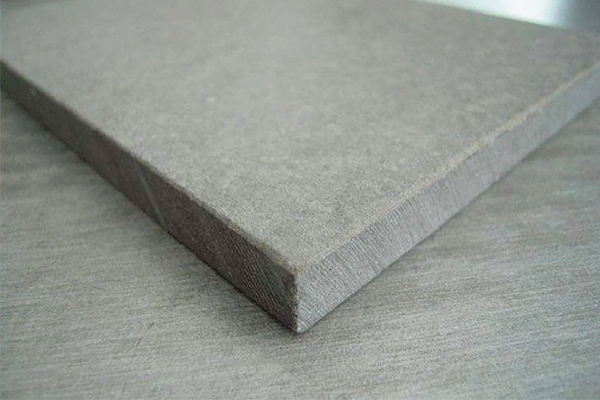
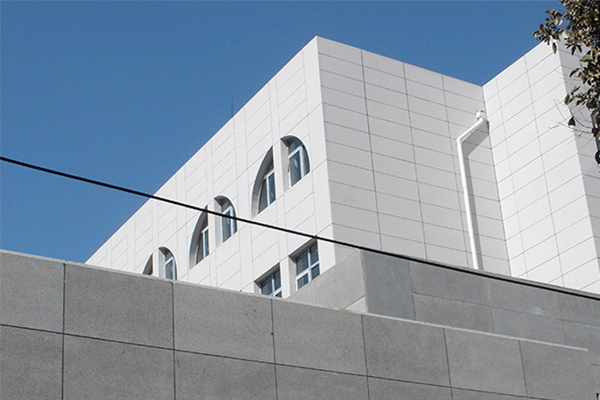


When it comes to fiber cement board with reinforced backing, many professionals in the renovation and construction field are undoubtedly familiar with it, as it is widely used in various building processes today. So, what are the key installation techniques for this material? The main points generally include connection with framing, board orientation, fasteners, seam treatment, and utility line placement. Below, we will provide a detailed introduction to the installation methods for reinforced fiber cement boards, as well as the necessary preparations before installation.

I. Installation Techniques for Reinforced Fiber Cement Boards
1. Connection with Framing
When installing reinforced fiber cement boards with wood framing, fix them using round nails or wood screws. For light steel framing, use self-tapping screws. If the base consists of non-metallic materials such as asbestos cement framing, expansion bolts should be employed. A ribbed rubber gasket strip should be placed between the board and the framing to ensure surface leveling and enhance sound insulation.
2. Board Orientation
For partition walls with fire resistance requirements, reinforced fiber cement boards should be installed vertically, meaning the long edges run parallel to the vertical framing. Only the butt joints need to be secured to the framing, ensuring they align with the center of the vertical framing flanges. Importantly, the boards should not be fixed to the top or bottom runners. For partition walls without fire resistance requirements, the boards may be installed either vertically or horizontally.
3. Fasteners
Fasteners should be placed 10 mm to 16 mm from the edges of the reinforced fiber cement boards. During tightening, ensure the boards are firmly secured to the framing. Begin fastening from the center of the board toward the long and short edges. Once in place, the fastener heads should be slightly countersunk into the board surface, taking care not to damage the board face.
4. Seam Treatment
When installing reinforced fiber cement boards, the fit against surrounding partition walls should be slightly loose, leaving a gap of less than 3 mm. First, apply about 6 mm of seam sealant. Then, position the board and press it to squeeze the sealant, ensuring tight contact with adjacent surfaces. Finally, secure the board in the standard manner.
5. Utility Line Placement
If utility lines such as water pipes, gas pipes, electrical wires, or insulation materials are to be installed within the cavity of the reinforced fiber cement board system, these should be installed first before attaching the board on the other side. The seams of the boards on both sides should be staggered by one vertical framing member.

II. Preparatory Work Before Installing Reinforced Fiber Cement Boards
1. Define the Partition's Function
The construction of a partition aims to address specific practical needs that the original building layout cannot meet. Therefore, the intended use of the partition should first be clarified. Different functions impose different spatial requirements, which directly influence the scope and elevation of the reinforced fiber cement board installation.
2. Determine the Partition Area
The approximate area for installing reinforced fiber cement boards can be determined based on the load-bearing capacity of the walls. Simply pursuing a larger area without consideration is an impractical approach. For spaces with higher ceilings or duplex units featuring double-height living areas, installing a partition might be necessary. Thus, the design of the board installation should align with the actual conditions.
3. Ensure Sufficient Ceiling Height
Generally, for duplex units, the bottom edge of the newly installed partition should align with the bottom edge of the first floor. For single-story partitions, the clearance under the partition should not be less than 2.6 meters. The internal clear height between the partition and the roof should ideally be no less than 2.4 meters, with a minimum of 2.2 meters, assuming the space is intended for occupancy.
4. Limit the Span of the Partition
When steel channels are used for the framework, the span should generally not exceed 4 meters, with an absolute maximum of 6 meters. If the partition is not intended for occupancy, the height can be determined more flexibly based on preference.
In summary, after reviewing the installation techniques and preparatory steps for reinforced fiber cement boards, we hope this information helps you gain a better understanding of this material.
Anhui huachengxing building materials technology co., LTD. ©️ disclaimer ICP17001972号
design by:www.ibw.cn

