


Contact
We will contact you as soon as possible.


I. Production Technology
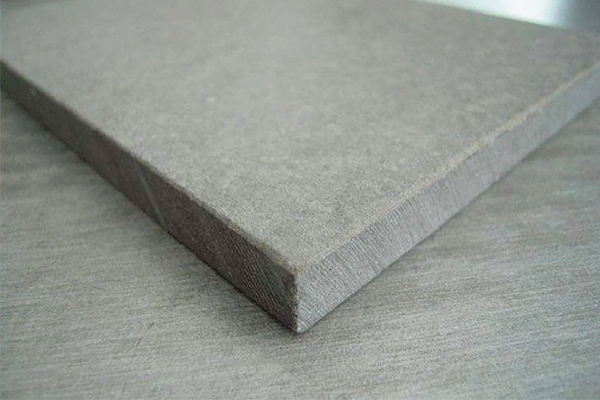
Our outdoor decking is manufactured from inorganic materials, including natural Portland cement, quartz sand, other siliceous and calcareous ingredients, and mineral plant fibers. It undergoes a sophisticated production process with more than ten precise procedures, such as pulping, molding, high‑tonnage compression, high‑temperature and high‑pressure autoclave steam curing, and surface coating using advanced spraying equipment.
The core substrate is high‑density fiber cement. Through strict application of professional coating technologies, the finished surface delivers outstanding resistance to freezing, UV radiation and weathering, making this wood‑grain decking a premium product in its class.
Structurally, the decking consists of three main layers: a wood‑grain surface layer, a high‑strength concrete base for structural stability, and integrated reinforcement to meet special load‑bearing demands.
II. Product Features
1 Excellent Comprehensive Performance
This product delivers outstanding performance in fire resistance, water resistance, corrosion resistance, moisture resistance, and insect prevention. It is antibacterial, non-toxic, pollution-free, and completely maintenance-free.
2 Good Workability & Easy Finishing
With workability similar to natural wood, it can be nailed, drilled, and glued. The surface is smooth and refined with strong paint adhesion, requiring no sanding or additional painting. It can also be repainted according to design preferences.
3 Stable Performance, No Wood Defects
The product eliminates common natural wood issues such as cracking, warping, and color inconsistency, greatly reducing the need for long-term maintenance.
4 High Customization & Flexible Design
Supported by unique production technology, it can be customized to various specifications, sizes, shapes, and thicknesses. A wide selection of designs, colors, and wood-grain finishes is available without polishing or painting, lowering processing costs and providing more options for customers.
5 Long Service Life & High Cost-Effectiveness
The product offers an extra-long service life and can be reused multiple times. On average, it lasts more than five times longer than wood, with a usage cost only 1/2 to 1/3 that of timber. It also features high strength, energy efficiency, and suitability for secondary processing.
6 Lightweight, Eco-Friendly & Safe
Lightweight, durable, and thermally insulating, the decking has a smooth surface. It is free from formaldehyde and other harmful substances, making it non-toxic and environmentally friendly.
Environmental Protection
Made from composite materials such as cement, sand, and iron oxide through molded casting, it realistically imitates the appearance of wood while helping to reduce deforestation.
Design
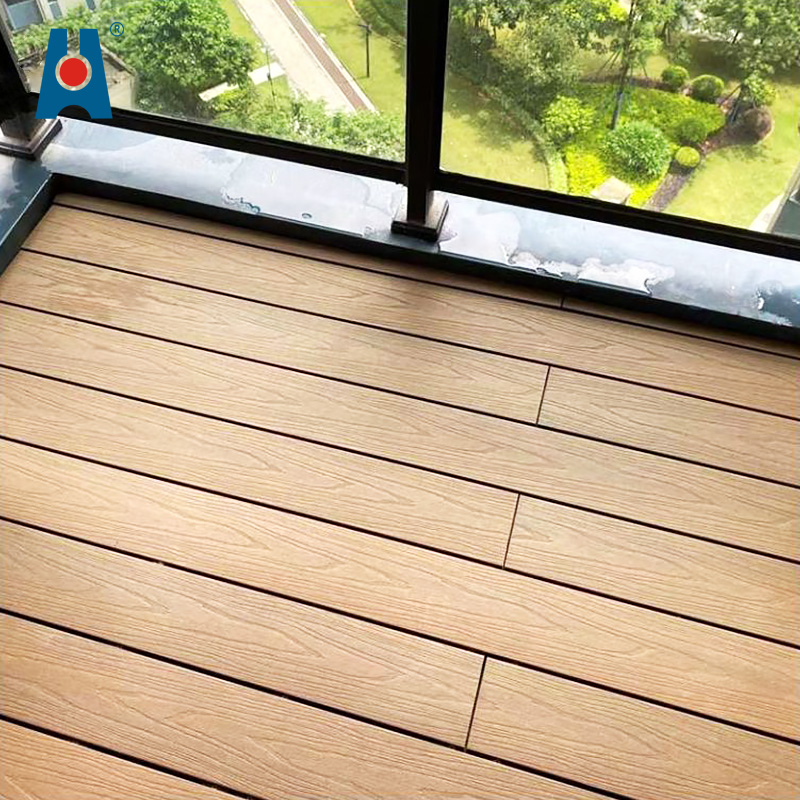
Smooth overall texture with realistic wood grain and excellent slip resistance.
Construction
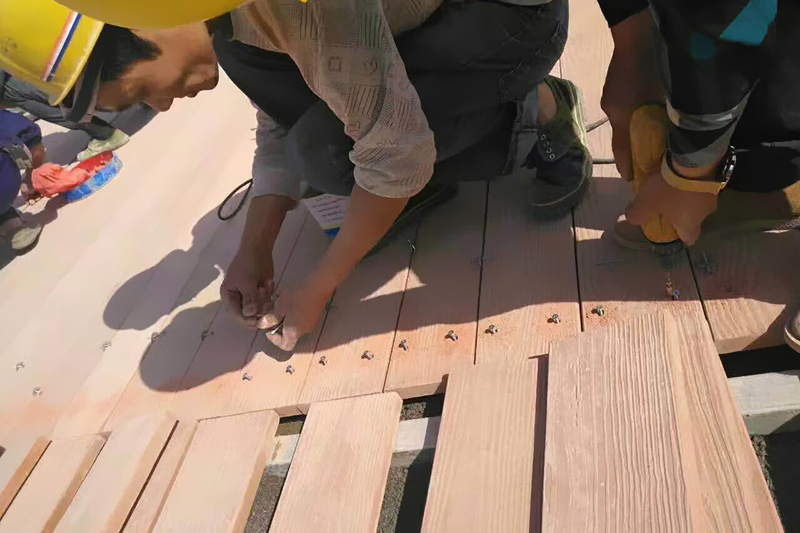
Produced as finished products in the factory, they are delivered to the site for quick and simple installation, similar to laying standard stone materials.
Usage
While designed to emulate real wood, it exceeds natural wood in texture and color consistency. Though its tactile feel differs slightly from wood, it offers excellent wear resistance – twice that of C20 concrete. Under normal pedestrian traffic, it shows no obvious wear for up to five years, providing a long-lasting and reliable solution.
Appearance
The wood grain and color are integrated during production, effectively avoiding the drawbacks of surface painting on traditional planks. Colors and surface effects can be customized to blend harmoniously with the surrounding environment and meet functional requirements.
Durability
With a long service life and minimal maintenance needs, the decking provides the lowest lifecycle cost. Proven in practical applications, the material features high wear resistance, strong weather resistance, and excellent coating adhesion.
III. Application Scope
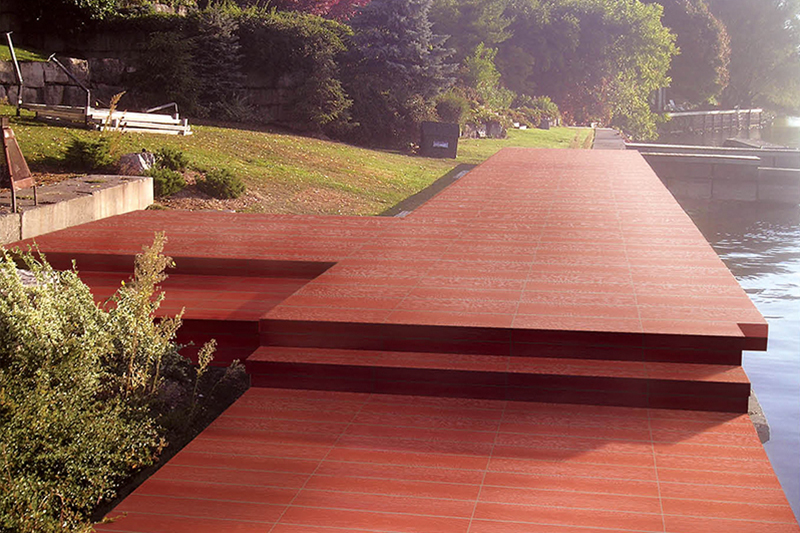
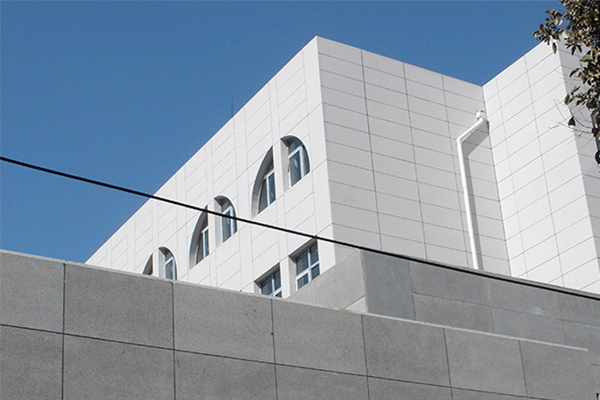
This product is widely used in various outdoor landscape projects, including floor paving, balcony flooring, square decking, boardwalks, docks, fences, railings, handrails, flower boxes, grape trellises, exterior decorative cladding and more.
Construction companies, designers and contractors can select this product according to the specific requirements of their projects.
Anhui huachengxing building materials technology co., LTD. ©️ disclaimer ICP17001972号
design by:www.ibw.cn

