Development and Industry Shuffle of the LOFT Steel Structure Floor Slab Sector
Date:2019-04-08 Views:1695
Insufficient Branded Products & Accelerated Layout by Leading Enterprises
China is home to a large number of LOFT steel structure floor slab manufacturers. However, the industry currently suffers from unevenness in both enterprise scale and product quality, coupled with a shortage of high-end LOFT steel structure floor slab products. Compared with overseas counterparts, the domestic industry features relatively low concentration. As consumers’ brand awareness continues to rise, high-end domestic LOFT steel structure floor slab brands are poised to reach new heights. Major manufacturers have already begun to deploy their strategies in the high-end floor slab market.
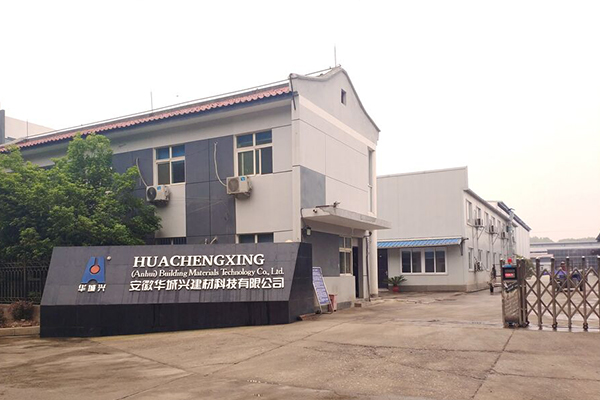
Huachengxing Group is a large-scale building materials entity integrating R&D, production and sales. It serves as the Vice Chairman Unit of the Calcium Silicate Cement Board Branch of the China Concrete and Cement Products Association, and is also one of the participating drafting units of the national industry standards for calcium silicate boards and fiber cement boards. Through relentless efforts and hard work, Huachengxing has built well-known industry brands including “Jiude”, “Huachengxing” and “Huashang”, laying a solid foundation for the enterprise’s long-term development.
Resource Integration Among Enterprises
In 2017, resource integration across the domestic industry became increasingly prominent, manifesting in both inter-enterprise integration and capital consolidation. This trend further enhanced the concentration of China’s floor slab industry.
Accelerated Industry Shuffle
The contradiction between supply and demand in the domestic industry remains acute, and competition among enterprises is intensifying. In 2017, affected by national macro-control policies, changes in the economic situation, and the growing attention consumers pay to brand and service quality, China’s floor slab industry faced a faster-paced reshuffle. Enterprises lacking competitive advantages were gradually eliminated from the market.
Slowing Output Growth Becomes the New Normal for LOFT Steel Structure Floor Slabs
The growth rate of China’s LOFT steel structure floor slab output is slowing down, which has become the new normal. In recent years, China’s market economy has shown signs of weakness, and the real estate sector has been in a downturn, making the development path of floor slab enterprises increasingly rugged. The domestic industry is now in a stage of green and healthy transformation and upgrading. Compared with traditional materials, high-strength cement floor slabs boast the following key advantages:
-
High density and strength, with a load-bearing capacity of 3 tons per square meter.
-
Lighter weight than cast-in-place floor slabs, reducing the load on buildings.
-
Thin thickness (usually 1200×2400×25mm), saving usable space.
-
Fire and water resistance, classified as a Grade A non-combustible new-type floor slab material.
-
Low thermal conductivity, delivering excellent thermal insulation performance.
-
Outstanding sound insulation effect.
-
Simple and quick construction, low comprehensive cost, and minimal construction waste.
-
Long service life, generally more than 50 years.
Strong Domestic Green Development Drive & Market Prospects
China’s commitment to green development continues to strengthen. Production restrictions have been imposed in regions such as Huangshan, and strict measures for winter air pollution control have been implemented in 2+26 cities in the Beijing-Tianjin-Hebei region and its surrounding areas. Along with the enforcement of specific emission reduction policies, the overall operating rate of manufacturers has remained relatively low. As a result, the market supply of both traditional building materials and new-type building materials like fiber cement pressure boards is currently tight, and it will be difficult for the overall factory operating rate to increase in the short term, from upstream to downstream sectors.
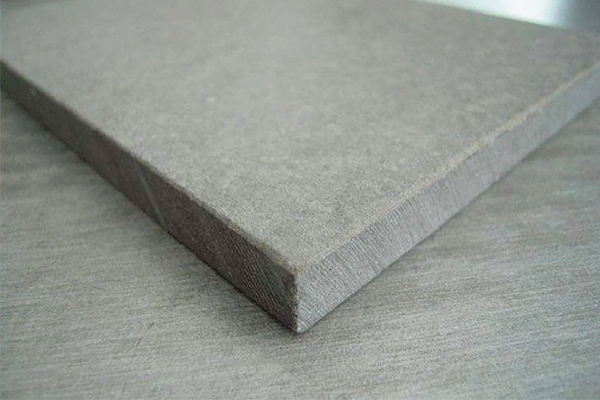
Fiber cement pressure boards are made from cement as the base material, fibers as the reinforcing material, plus a certain amount of additives and fillers. The production process involves batching the raw materials into slurry in specific proportions, followed by blank forming, blank joining, cutting, stacking, pressing, curing, demolding, drying and further processing. Given its excellent performance and compliance with green development trends, fiber cement pressure boards enjoy considerable market development potential.