Installation Process of Perforated Acoustic Fiber Cement Boards
Date:2019-04-08 Views:1634
-
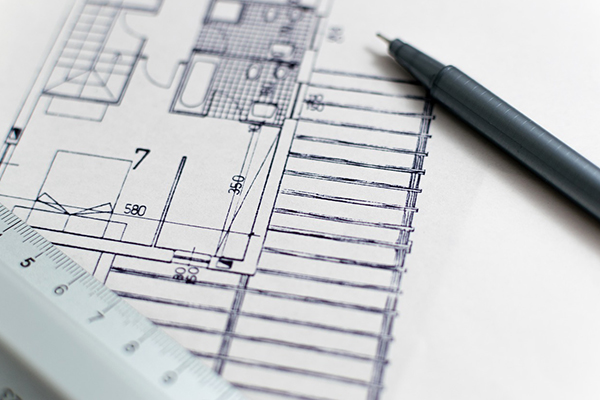
Individual Design: If there are wall structure drawings, construction shall be carried out in accordance with the design drawings. If only the floor plan of the wall is provided in the individual project design, the structural nodes in the standard atlas can be directly selected for construction.
-
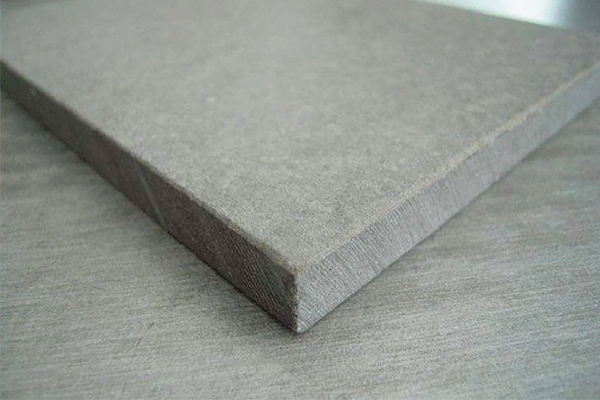
Fiber cement boards are non-combustible materials, with fire performance superior to gypsum boards.
-
Whether to use rock wool in the wall shall be determined according to sound insulation and thermal insulation requirements. For all partition walls filled with rock wool boards, rock wool nails must be used to fix the rock wool boards during construction.
-
Fiber cement boards can be laid horizontally or vertically. However, walls with fire protection requirements must adopt vertical laying, and the long-side joints must fall on vertical keels. If the board length is insufficient and splicing is required, horizontal keels shall be added at the horizontal joints.
-
When fixing the boards, start from the middle of one board and fix towards the long and short sides. After the nails are in place, the nail heads shall be embedded in the board and firmly combined with the keel frame.
-
The joints on the wall surface shall be staggered, and the joints on both sides of the wall shall not fall on the same keel. Where full-length boards can be used in practice, splicing joints should be avoided. Holes can be drilled after the boards are fixed.
-
Fiber cement boards can be sawn, planed, and nailed with iron nails. Since wooden keels are not recommended for promotion, it is advisable to use self-tapping screws to fasten with light steel keels.
-
For boards to be decorated with wallpaper or sprayed with coatings, the smooth surface of the board shall face outward; for boards to be pasted with ceramic tiles or marble, the rough surface of the board shall face outward to facilitate bonding.
-
For the joints of the boards, VP putty can be used to fill and smooth the joints, then wallpaper can be pasted according to conventional methods. If ceramic tiles, marble, etc., need to be pasted, it is recommended to use EC-polymer mortar for pasting to ensure leveling. If wall coatings need to be sprayed or paint applied to the board surface, the board edges shall be planed into bevels in advance. After butting, glass fiber mesh cloth shall be embedded in the joints, and then VP putty shall be used to fill and smooth the joints to prevent cracking.
-
Relevant to door opening structures, wall openings for electrical boxes or pipes, or wall load-bearing requirements.
-
After the construction of the partition and ceiling keels for perforated acoustic fiber cement boards, intermediate acceptance is required. Note: According to the design drawing requirements, the floor and ceiling keels shall be accurately fixed on the concrete floor with adhesive strips attached. The maximum horizontal spacing of the shooting nails for fixing the keels is 800mm, and the maximum vertical spacing is 1000mm. The upper and lower ends of the vertical keels are inserted into the ceiling and floor keels, and the dimensions are adjusted as required. Position accurately, ensure verticality, and fix with calipers by punching rivet holes to connect with the ceiling (floor) keels. However, for walls with fire resistance rating requirements, the length of the vertical keels is 30mm shorter than the actual distance between the upper and lower parts to form 15mm expansion joints at the top and bottom. The spacing of vertical keels is 400-600mm. Vertical keels adjacent to walls (columns) shall be fixed with shooting nails at a spacing of 1000mm.